STORY 50 · ENGLISH
Turning astringent persimmons into a winter sweet
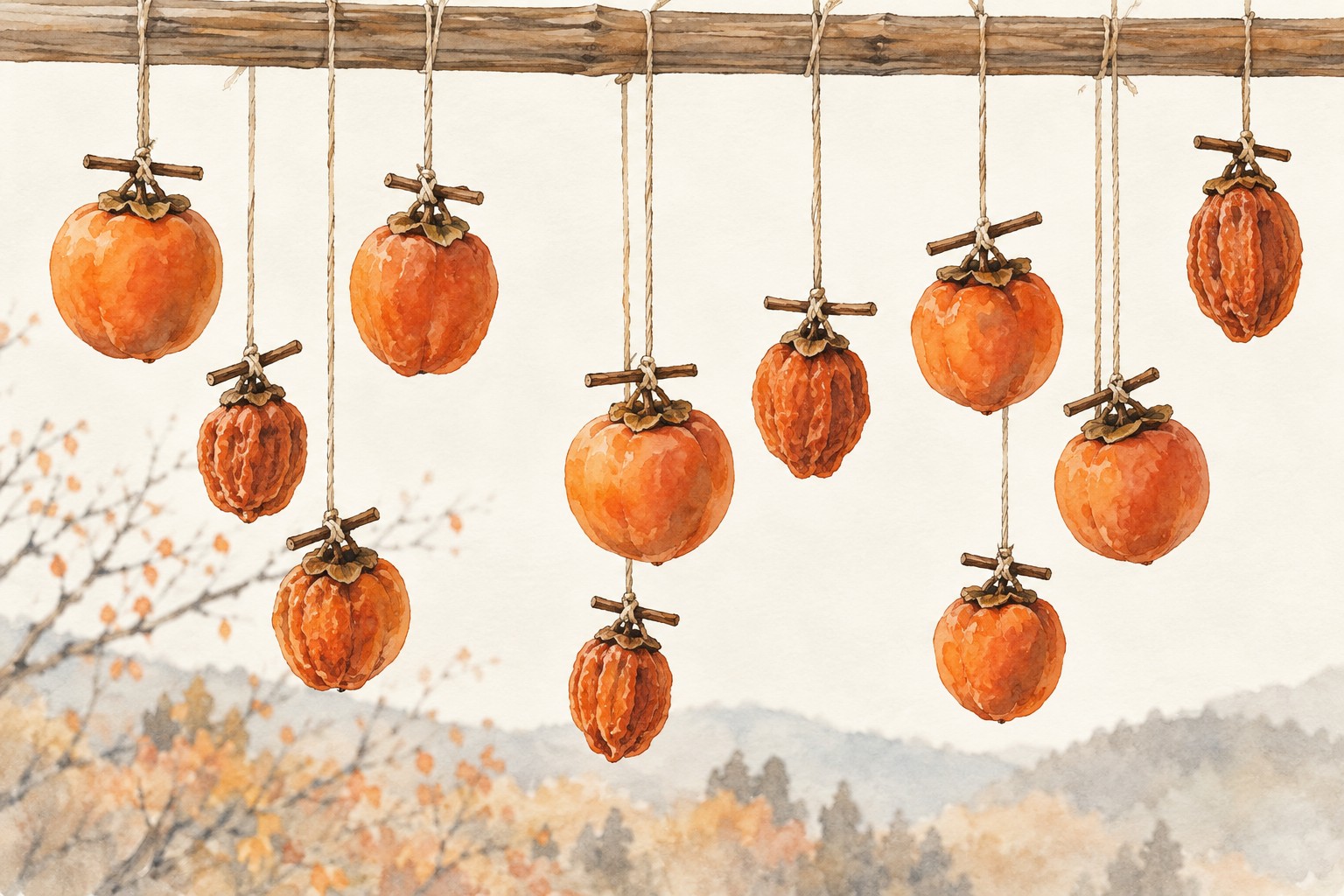
Peeled, strung up and left to dry, persimmons become something sweet to keep for winter. The waiting becomes part of the landscape.
Some persimmons can be picked from a tree and eaten just as they are. Others cannot.
Shibugaki, or astringent persimmons, live up to their name. Tannins in the flesh leave a strong, mouth-puckering sensation that makes them difficult to eat as they are. But people have long found ways to make these persimmons good to eat.
Peel them, tie them to strings, and hang them in the air to dry. This is hoshigaki: dried persimmons.
Korogaki in Yamanashi, anpogaki in Fukushima, Ichida-gaki in Nagano. Japan’s Ministry of Agriculture, Forestry and Fisheries introduces these regional traditions through its accounts of local foods and the places where they are made.
Even with the same fruit, the drying method, the moisture left inside, the variety and the place all affect its softness and appearance. There is something else about dried persimmons, too. The making is not hidden away.
With food made inside a factory, we often see only the finished product. But persimmons hanging beneath the eaves or in drying areas become part of the local seasonal landscape.
Rows of orange fruit hang in plain sight, still on their way from fresh persimmons to dried ones.
As time passes, moisture leaves the fruit, the astringency becomes less noticeable, and the sweetness stands out. The fruit grows smaller, its surface wrinkles, and some develop a white powdery coating.
No sugar has been added. Yet fruit that was once so astringent becomes a sweet food that keeps, something you might want beside a cup of tea in winter.
Drying persimmons is a way to keep an autumn fruit into winter. It also makes the time spent waiting for that change part of the landscape.